#67 My Name is Lucy Barton by Elizabeth Strout

25893709After finishing Elizabeth Strout’s beautiful collection of interwoven stories, Anything is Possible, I couldn’t wait to read My Name is Lucy Barton. Strout’s Lucy Barton appears in a few of the stories in Anything is Possible; her life is talked about, touched upon, speculated over.

My Name is Lucy Barton is told from her perspective. Sick in the hospital after an operation, Lucy unravels the trajectory of her life for the reader: the extreme poverty of her youth, her escape from a small town in Illinois, her move to New York City, her path to motherhood, and success as a writer. When Lucy’s mother, a cold and distant woman, flies to Lucy’s sickbed to be with her, memories and old insecurities surface.

Strout is a writer of masterful, elegant prose, and there’s a complexity to her characters that never feels forced or contrived. I thoroughly enjoyed the novel, though the narrative felt slightly unbalanced. As Lucy attempts to reconcile her past and present selves, important threads of her story, particularly that of her marriage and children, and her life as a writer, are told with certain carelessness and ultimately feel underdeveloped.
#66 Anything is Possible by Elizabeth Strout

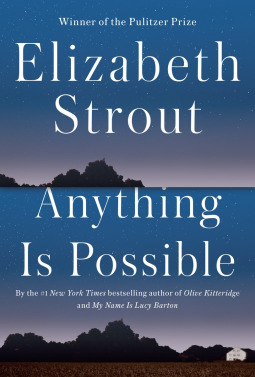
32080126Anything is Possible is just charming.

Elizabeth Strout, author of Olive Kitteridge and My Name is Lucy Barton, has crafted a beautiful collection of overlapping stories, rich with distinctive characters, alive with strikingly elegant prose. My Name is Lucy Barton was written at the same time and Lucy and the Barton family make appearances in a few of these stories.

Set in Amgash, a small town in Illinois, and beyond, each story acts as a character portrait, each paragraph shapes the identities of the townspeople, and, as the book progresses, the stories simultaneously forge and peel back those identities. Characters are drawn from various perspectives as they struggle to find meaning in life and to connect. Relationships are exposed. Personality strengths and flaws are actualized.

Strout writes with a quiet, assured power. As a reader, you can trust that wherever she takes you within a story, you are in good hands.

#65 Vicious by V.E. Schwab

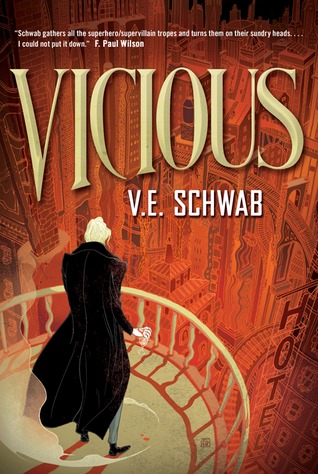
13638125If you’ve been following Brief Book Reviews from the beginning, you’ll have read all about my fondness for the highly entertaining Shades of Magic series by V.E. Schwab.
Vicious, the first (and, so far, only) book in Schwab’s Villains trilogy, is a coming-of-age superhero/villain creation story with a quirky cast of damaged characters.

Though I knew it was unlikely, I wanted to be as taken with Vicious as I was with the Shades of Magic trilogy. The writing was fine. The story had some charm. But, by the end of the book I realized this: I love magic (no surprise there), I don’t love superhero myths.


#63 The Essex Serpent by Sarah Perry

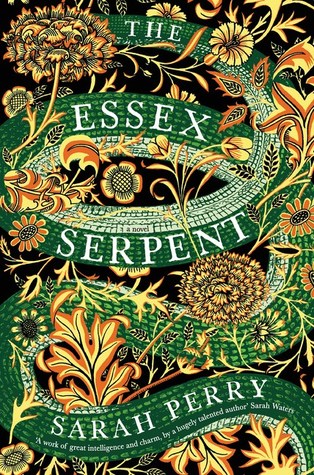
32075861Set in Victorian London and the countryside of Essex, Sarah Perry’s The Essex Serpent follows Cora Seaborne as she journeys with her son and his nanny, Martha, to the marshy (fictional) village of Aldwinter for a change of scenery after the death of her cruel husband. There, Cora learns about sightings of a mythical sea serpent whose potential is fueling the imaginations of the locals and inciting creature panic.
While in Essex, superstition and religion intersect, friendships are born and tested, and the lives of Perry’s characters are forever changed.

I was hoping for something intensely readable like Sarah Waters’ Fingersmith or Michael Cox’s The Meaning of Night, but the reading of this was fairly laborious. It’s a hefty book with some smart writing and well-crafted passages, but the story never fully grabbed me and the book put me to sleep a few nights in a row.

Save

#61 Nutshell by Ian McEwan

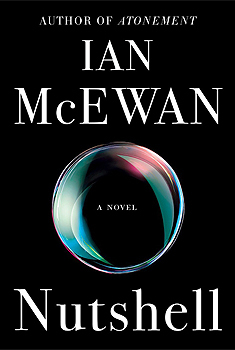
30008702Darkly comic, Ian McEwan’s Nutshell brings a loose retelling of Hamlet into modern-day London and positions the tragic “prince” in utero, a witness to the murder machinations at play between his mother and her lover as they plot to kill his father.

Nutshell is definitely clever, in concept and execution, with fine writing throughout, though the novel bows under the weight of that heady cleverness. The plot hinges on one unsurprising act, and the story leaves no real emotional impact. While it is unlikely that there has ever been a more erudite or insightful womb-bound being, the other characters, blandly conniving caricatures, cannot live up to the narrative technique.

#57 Bad Dreams and Other Stories by Tessa Hadley

31449412If you’re an avid reader of The New Yorker, a number of the short stories in Tessa Hadley’s recently-released Bad Dreams and Other Stories will be familiar to you. Personally, I can’t keep up with the stacks of New Yorker magazines that mock me around our house, so most of the stories were new to me.

Hadley’s stories are skillfully composed around a particular narrative tension. As if living in a bad dream, many of her characters face potential or inferred danger, with possibly shady characters in uncomfortable situations. A teenage girl in “An Abduction” is picked up by a car of boisterous drunk boys who want to take her for a ride. It seems only natural to think girl, that is just not a good idea. In “Under the Sign of the Moon,” an older woman with cancer, on the train to see her daughter, meets an overly friendly, albeit slightly off young man who won’t stop trying to engage her in conversation. Ugh, is he the pervert we suspect he might be? In “One Saturday Morning” a young girl, left at home to practice piano while her family goes grocery shopping, lets in a family friend, a man. They occupy the house together, moving quietly in separate rooms but deeply aware of each other, waiting for her family to return. Maybe I’ve been listening to too much My Favorite Murder, but something in that scenario sets off where’s he going to stash the body alarm bells. Within each story, however, is a measure of surprise; the possibility of danger doesn’t always signal a real threat, and Hadley’s characters luckily manage to walk away unscathed.

#56 Woman No. 17 by Edan Lepucki

23616719In Woman No. 17 Edan Lepucki, author of the dystopian debut California (on my to-read list), captures the hazy aura of summertime in Los Angeles. The plot revolves around Lady, a complicated mother of two sons, a teenager and a toddler, and S, the nanny she hires to take care of her toddler and live in the pool cottage behind her house. Lady is on a break from her husband and S, who fancies herself an artist, is determined to make some kind of mark on the world. Things get messy.

Though the back cover touts this book as a “sinister, sexy noir,” I just found it sadly tiresome. Lady and S are narcissists, emotionally damaged by their own mothers’ demons and inadequacies, and bent on disrupting whatever calm settles around them. While Lepucki is clearly a gifted writer and I’m looking forward to reading California, I was happy to leave this liquor-soaked, self-obsessed world of “posh” LA behind.

#55 The Wolf Road by Beth Lewis

32912923Wow. This book kept me up past midnight, furiously flipping page after page towards the bloody end and listening intently to the creaks and noises in my silent house with wide open eyes.
Beth Lewis’ The Wolf Road is intense and unflinching, terrifying and great. Looking for a well-written and suspenseful beach read? Well, here you go. (Maybe don’t read it in the forest in the dark by yourself.)

Like Nettie Lonesome, the heroine in Lila Bowen’s Wake of Vultures, Lewis’ Elka is a strong young female protagonist fighting for survival and connection in a cruel, dangerous world. After a huge storm, Elka is taken in by Trapper, a quiet hunter harboring a secret. When Elka discovers the truth about Trapper, she escapes into the wilderness to survive. But will she survive with Trapper nipping at her heels?

The setting is post-apocalyptic, but not overtly so. The remote Canadian wilderness Elka escapes into is alive with trees and wildlife, but crater lakes formed by Russian bombs leak chemicals into the Earth, and mentions of old wars and bombs that destroyed large swaths of North America are peppered throughout the book and inform the fierce survivalist nature of the characters.


#54 The Windfall by Diksha Basu

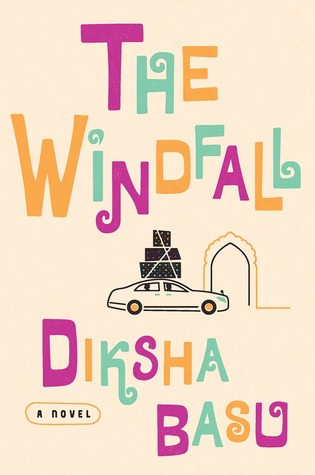
32569560Diksha Basu’s debut novel The Windfall is light and funny, a quick read after my last book, The Name of the Wind.

Set in Delhi and New York, the story follows the newly rich Mr. and Mrs. Jha as they move from the housing complex where they’ve lived for years in East Delhi to the exclusive part of the city where everyone belongs to the Luxury Recreation Club and the neighbors constantly attempt to one-up each other. We’re also privy to the failings of their son who is secretly dating a white woman while at university in America, and their lonely widowed neighbor, the beautiful Mrs. Ray, as she searches for companionship.

Basu is a great writer of dialogue. The conversations between the characters are hilarious and sometimes cringe-worthy, and cleverly reveal the desires, expectations, fears, and inadequacies of the characters themselves.

Save